

One of the greatest privileges in disaster response is walking alongside local partners
Learn about earthquakes and explore how we help communities recover
Learn about earthquakes and explore how we help communities recover

Powerful earthquakes can strike without warning, destroying homes, injuring thousands, and disrupting vital services. Heart to Heart International’s earthquake relief approach focuses on rapid earthquake response, delivering hygiene kits, medical supplies, and long-term earthquake recovery support. Our teams partner with local organizations to restore health services and help communities rebuild.
Heart to Heart International provides trusted, compassionate earthquake relief wherever and whenever it’s needed most. Together, we can save lives, support earthquake recovery, and help communities rebuild stronger.
Earthquake causes include sudden shifts in the Earth’s tectonic plates, volcanic activity, and, in rare cases, human activities like mining or reservoir-induced seismicity. Most major earthquakes happen along fault lines where pressure has built up over time.
Scientists use the Richter scale and the Moment Magnitude Scale (Mw) to measure earthquake strength, along with seismographs to detect and record seismic waves. The higher the magnitude, the more destructive the earthquake disaster can be.


Make an earthquake preparedness plan for your household.
Identify safe spots in each room (under sturdy tables, away from windows).
Prepare an emergency kit with water, food, first aid, and flashlights.
Stay informed through local alerts and practice drills regularly.
About 20,000 earthquakes are detected worldwide each year.
Large earthquakes are most likely along the “Ring of Fire,” which includes parts of the U.S., Asia, and South America.
Earthquake safety tips: drop, cover, and hold on; stay indoors until shaking stops; avoid elevators.
Follow your earthquake preparedness plan to reduce injury risk.


An earthquake preparedness plan is your best defense against the sudden and unpredictable nature of earthquakes. It outlines the steps you and your family should take before, during, and after an earthquake to protect lives and minimize damage. A strong plan includes:
Identifying safe spots in every room.
Securing heavy furniture, appliances, and objects that could fall.
Assembling an emergency kit with food, water, first aid, and other essentials.
Practicing Drop, Cover, and Hold On drills regularly.
Knowing how to turn off utilities like gas, water, and electricity.
Preparedness doesn’t just protect your household—it helps your entire community recover faster. For detailed guidance, visit Ready.gov’s Earthquake Preparedness page.

Disaster Responses: 10 major earthquake relief missions worldwide.
Medical Aid Delivered: Over $19 million in medicines, medical supplies, and equipment.
Hygiene Kits Distributed: 112,000+ kits to help families stay healthy during earthquake recovery.
Countries & Regions Served: Including Türkiye, Nepal, Haiti, Indonesia, and more.
Volunteer Engagement: Hundreds of trained responders deployed to provide care and support.
During earthquake responses, we can deliver:
Hygiene kits with soap, shampoo, toothbrushes, and other essentials
First aid and medical supplies for individuals and shelters
Sustainable health services for ongoing community support
Health equity resources to reach at-risk groups
Volunteer medical teams for urgent disaster relief


One of the greatest privileges in disaster response is walking alongside local partners
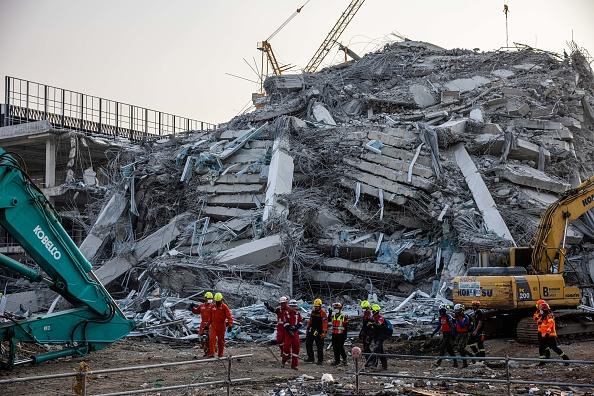
A catastrophic 7.7-magnitude earthquake struck Myanmar


In the wake of the powerful 6.8 magnitude earthquake that struck near Marrakech, Morocco, this past weekend, HHI sent a shipment of hygiene kits to a partner on the ground.

A devastating 7.8 magnitude earthquake ripped through Türkiye (Turkey) and Syria around 4am local time on Monday, February 6.

Hygiene kits have been delivered to our partners at WaterMission to help in the aftermath of the earthquake that struck Turkey and Syria on Monday.
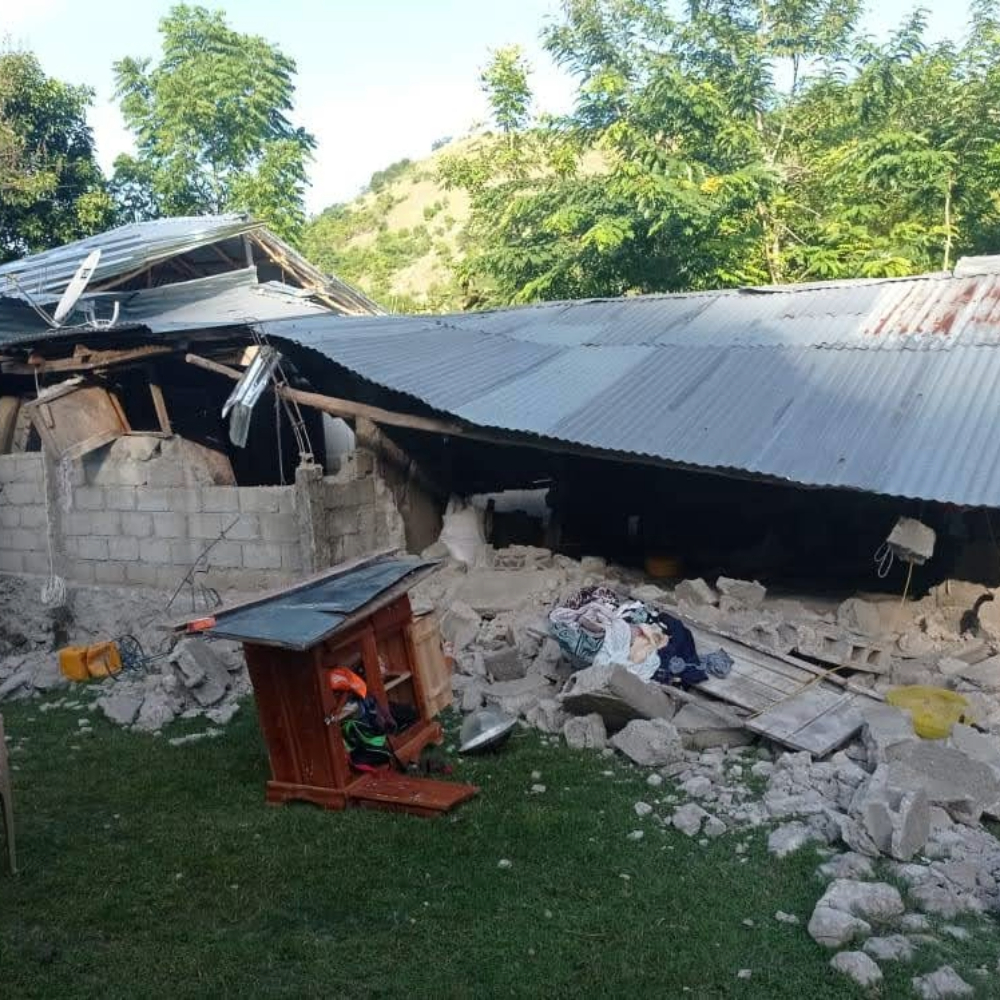
Saturday morning, August 14, a 7.2 magnitude earthquake struck about 150 km west of the capital Port-au-Prince in Haiti.
What this organization is doing for people in the US and all over the world is nothing short of amazing. Spending a few hours to volunteer was a great experience and I would definitely encourage everyone to find time to contribute!

I volunteer, along with others, who have a common goal. To help and support the staff as they organize then head out across the globe with hygiene kits, medicines and mobile clinics. When a request comes in for help from HHI, staff is ready and willing to help but it also takes many volunteers and donations to support this goal.
Great organization helping folks in the USA and wherever needed around the world.
I read a lot of news every day because I want to know what is going on around me and in the world. Being aware of the many disasters and injustices can feel like a huge burden to carry. Volunteering at Heart to Heart gives me the sense that I am helping in a small way and I’m not just involved with my own stuff.
As I’m aging, I realized how blessed I’ve been in so many ways. In my younger years, I worked a lot with the homeless community. As I’m aging I wanted to still give back to my community but do it closer to my home. I volunteered at Heart to Heart with a church group and decided I liked their mission. I’m just one person, but uniting with a group like Heart to Heart I can do so much more.
I feel so privileged to be able to help anyone in need. I’ve learned so much from people who are humbled by life’s struggles. As one person told me, “we’re all just one disaster from homelessness.” Every person should volunteer at least once in their life.
I love to provide quality time in service. Service is at the core of my being. My parents taught me when I was a child to never stop serving and loving people.
Volunteering helps me to feel that I am moving forward in a positive way and that my contribution has some purpose especially in these times of great hardship and suffering for so many people.
I love being able to do something for others especially in a real time of need. Serving fills my cup and blesses my heart. It never ceases to amaze me that in the middle of all the tragedy, those we serve always thank us for being there.
Volunteering reminds me that healing doesn’t always come in big moments; it often shows up in simple acts of kindness, shared humanity, and showing up for people when they feel forgotten. That’s why I’m proud to serve.
I volunteer with Heart to Heart in order to “pay back” for what I have received in that “giving in need” chain. Having been on the receiving end of a disaster, I know what it means to get that package of immediate needs, and am so, so thankful for those that make that happen. Just my small part in my volunteer journey to “give back”.
In October 2024 I was deployed with Heart to Heart to North Carolina following Hurricane Helene. On our last day there we were able to help a young woman by refilling her prescription medication that she had been unable to get. As I was saying goodbye, she told me that she was grateful we could help her as it was one less thing she had to do following this disaster. She was tearful and we gave each other a hug. It reminded me that even this small service can have a very positive impact on a person’s life.
Despite being a physician used to heal and help others, volunteering and helping people in very vulnerable situations has been extremely rewarding. Their appreciation and resilience in face of tremendous adversity is grounding and inspiring.
I volunteer with HHI because I believe in the organization’s founding principle of bringing volunteers together to serve a world in need.
My family has been on the receiving end for Hygiene Kits after natural disasters (major flood in Great Bend, KS and F4 tornado in Hoisington, KS). I know exactly how it feels to receive a Hygiene Kit when your personal items are gone. I am grateful, HHI gives me the opportunity to pay if forward!
Having lost all our possessions/home in a tornado, I have great empathy/sympathy for those thrust into disaster/loss. I was on the receiving side of immediate care and food, housing, and resources. I feel so privileged to be able to help anyone in need.
I hope the small amount I am able to give in some way improves the lives of those less fortunate. Your boots on the ground and the hygiene kits let others know we do care.
By helping to pack hygiene kits, or providing money to help purchase items for the kits or other needed products, my small donation can have a large impact for those who need the help.

Medical testing plays a vital role in delivering effective healthcare services. However, remote communities in Ghana face significant challenges due to limited access to laboratory diagnostics. To address this issue, Heart to Heart International has partnered with BD, a global leader in medical technology, and Millennium Promise, a nonprofit organization focused on disease diagnosis and prevention in Ghana. Our partners at Millennium Promise stated, ‘”The completion of the Laboratory Block marks a transformational step in healthcare delivery for the community.”
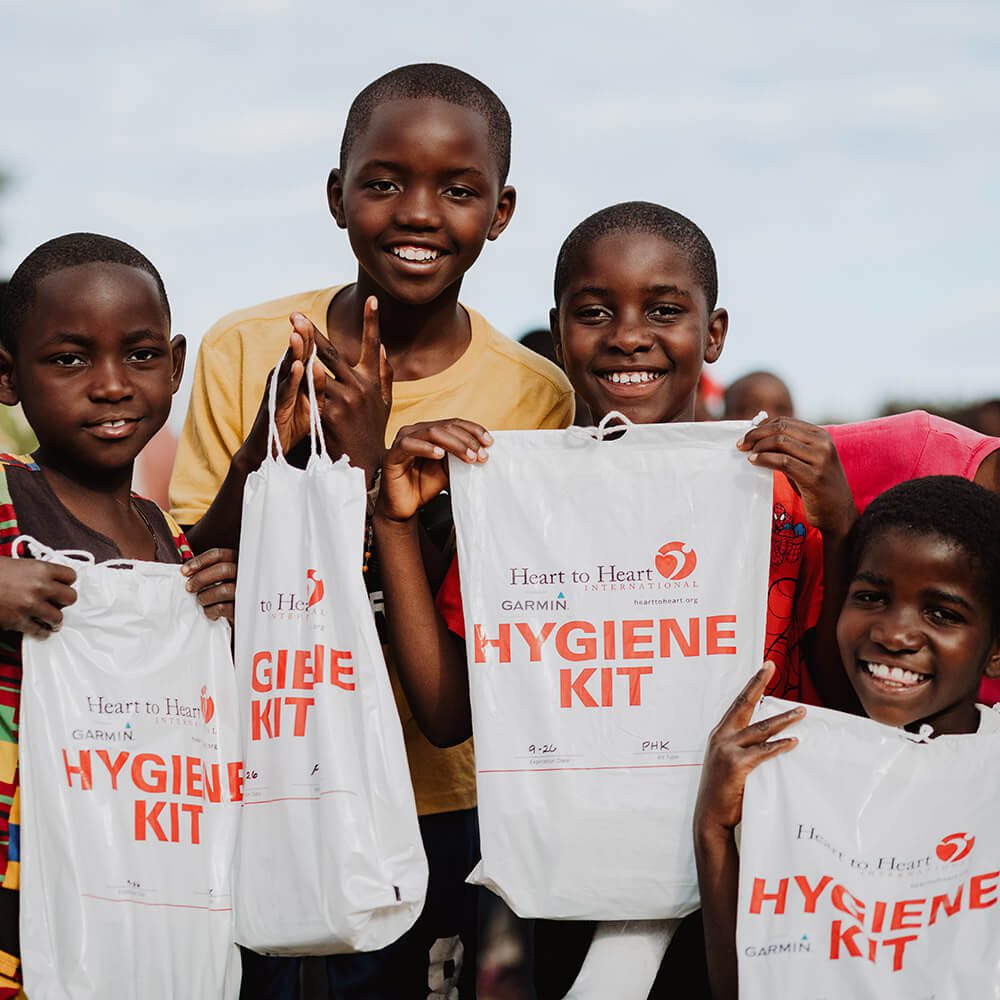
We distributed 8,000 Hygiene kits to 600 youth from the community. The items in the kits are considered a luxury to most of the community, (even basic soap and washcloth) so they were incredibly helpful in the aim to promote health and good hygiene for all of them. They were so happy! The health of these youth will be improved immensely! Every single recipient of the hygiene kits was so very grateful. One said to us “I can now feel good and keep clean, zikomo!”

Your loyalty helps us not to give up and gives us the feeling of a reliable shoulder to lean on.

Your donations of medicines and supplies sustain our clinic, supporting the most vulnerable children. Thank you!

If the only thing that was useful from your shipment was this wheelchair, it would’ve all been worth it because you changed this man’s life.” – Fundación Nueva Alegria in Dominican Republic

May I take this opportunity to thank the donors for saving my life. I was afraid I would die after the snake bite. The medical care was amazing.” – Tebenguni, a 15-year-old girl in Eswatini, who received life-saving care thanks to donated medical supplies.
Preparing for an earthquake starts with creating an earthquake preparedness plan for your household or workplace.
For detailed guidance, visit Ready.gov’s Earthquake Preparedness page.
During earthquakes, remember the Drop, Cover, and Hold On method:
Preparing involves three main steps:
Survival depends on quick action and preparation.
The safest place is indoors under sturdy furniture such as a desk or table, away from glass, mirrors, or anything that can fall. If you can’t get under furniture, crouch against an interior wall and protect your head and neck.
Outdoors, the safest location is a wide, open space away from buildings, trees, power lines, and streetlights.
Participating in earthquake relief efforts or supporting organizations through an earthquake donation can help affected communities recover faster.
The key is to stay where you are until the shaking stops—don’t run outside unless you are in immediate danger.
Protect yourself from falling objects, remain low to the ground, and keep your head and neck covered.
If you are in bed, stay there and protect your head with a pillow unless you’re under a heavy light fixture or ceiling fan that could fall.