

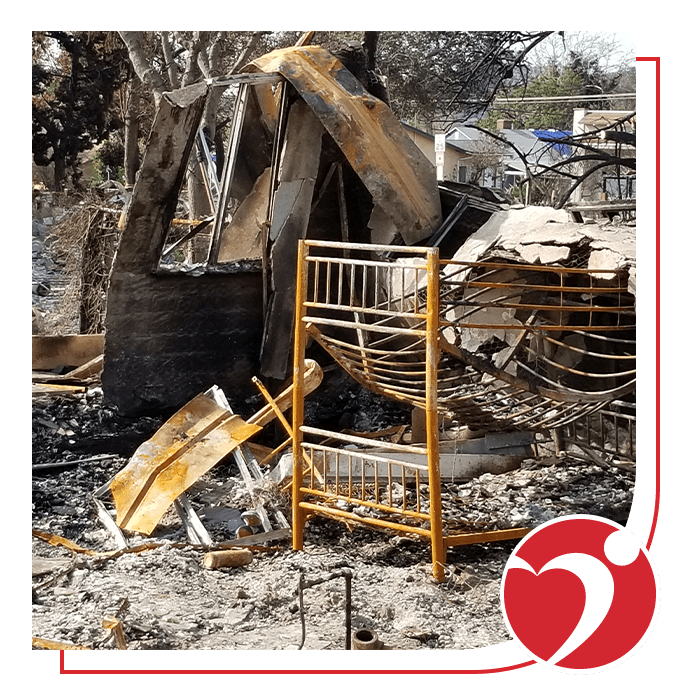
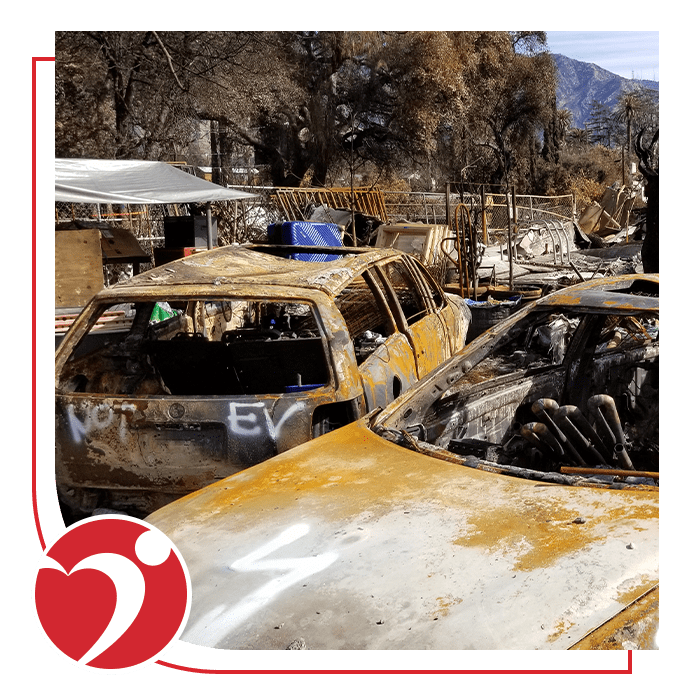
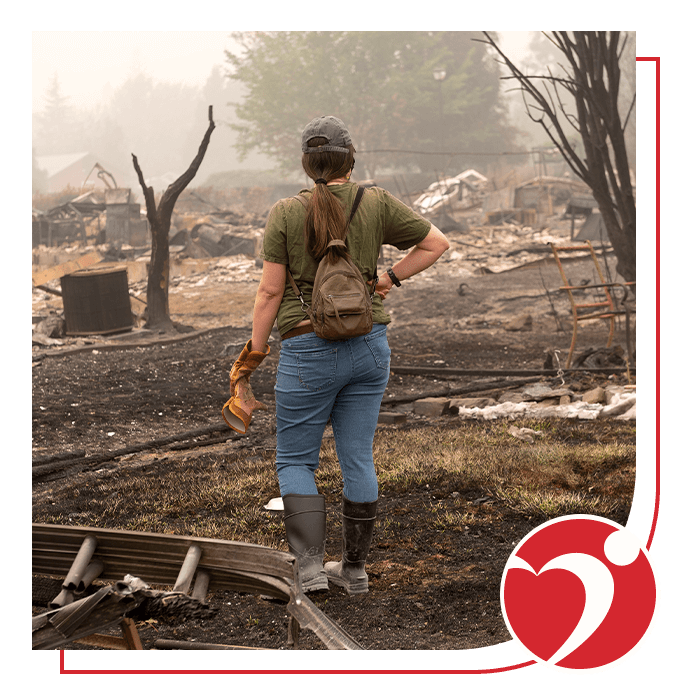
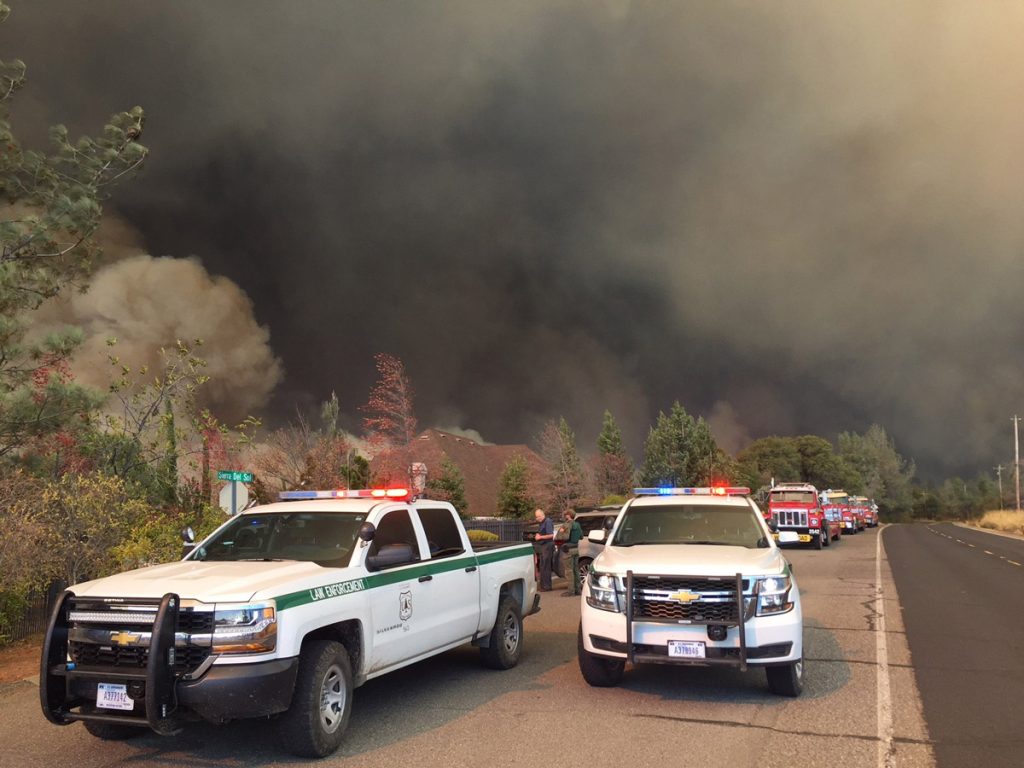
The recent California fires have unleashed devastating destruction, displacing countless residents and leaving communities…
Empowering people with immediate aid, long-term recovery, and wildfire safety resources.
Empowering people with immediate aid, long-term recovery, and wildfire safety resources.

Rising global temperatures and prolonged drought conditions are driving a sharp rise in wildfires. These disasters move swiftly, often giving communities little time to react. Our wildfire relief approach combines speed, coordination, and compassion. We work with our partners to deploy hygiene kits, emergency supplies, and wildfire recovery resources.
Heart to Heart International is committed to delivering trusted, compassionate wildfire assistance wherever and whenever it’s needed most. Together, we can reduce harm, support wildfire recovery, and help communities heal.
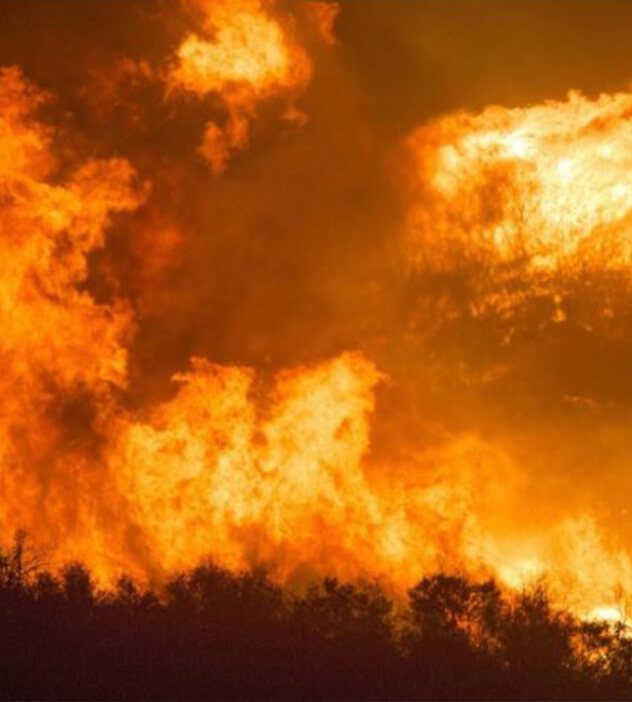
A wildfire is an uncontrolled fire that spreads rapidly through vegetation, forests, or grasslands. These fast-moving disasters can destroy homes, threaten lives, and severely damage ecosystems.
Wildfire causes include lightning strikes, human activity like unattended campfires, or downed power lines. As climate conditions worsen, wildfires become more intense and frequent.

Create an emergency plan with your family.
Prepare a go-bag with essentials.
Follow local evacuation orders.
Stay informed through local alerts.
64,000+ wildfires occur each year in the U.S.
85–90% are caused by people.
Always follow wildfire safety guidelines—clear brush around your home, prepare escape routes, and never leave fires unattended.
17,730 hygiene kits distributed to wildfire survivors
5 wildfire responses, including California, North Carolina, Oregon and Hawaii
17 community partnerships activated for wildfire recovery efforts
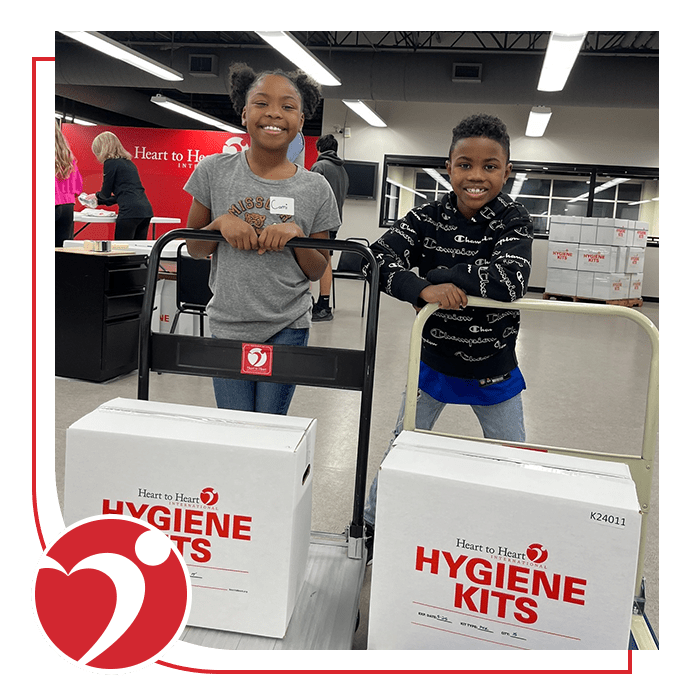
During wildfire relief responses, we offer communities:
Hygiene kits with soap, shampoo, toothbrushes, and other essentials
First aid and medical supplies for individuals and shelters
Support for sustainable health services for ongoing community support

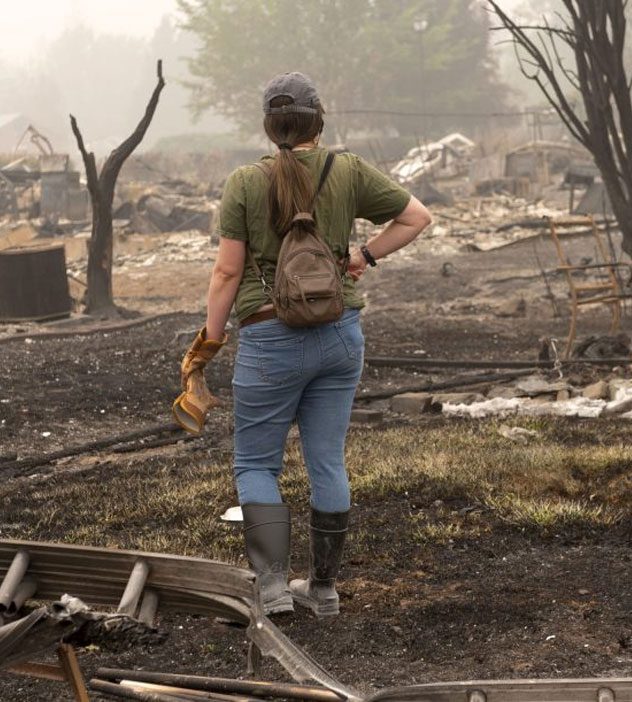
The recent wildfires in California have caused widespread destruction..
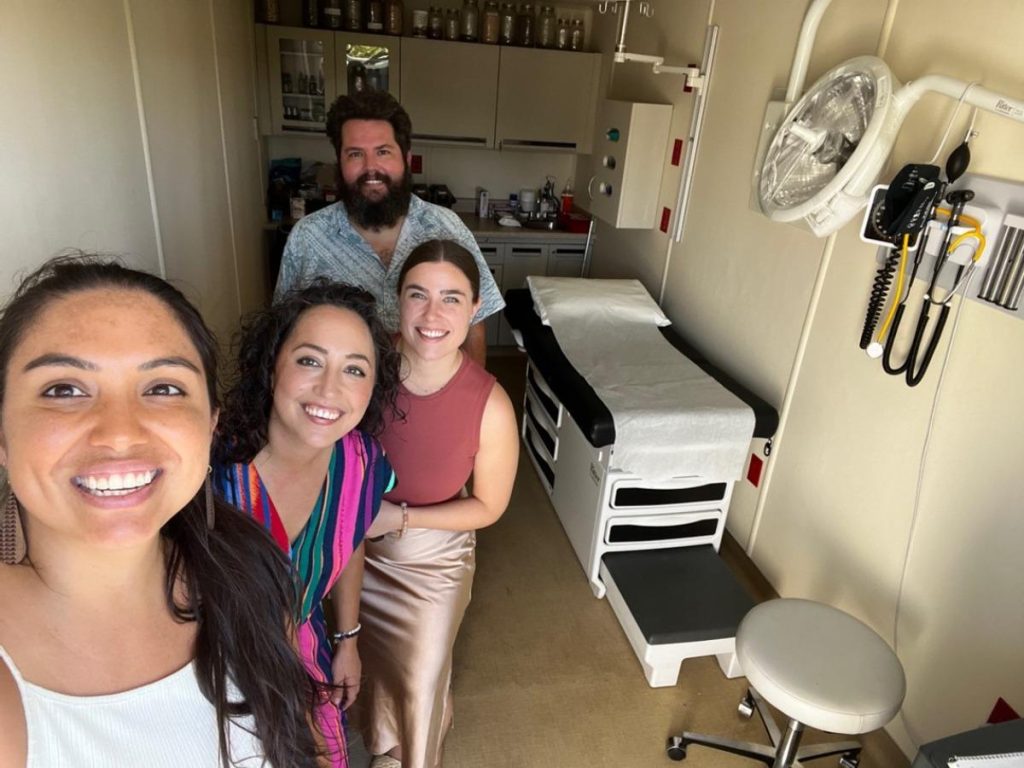
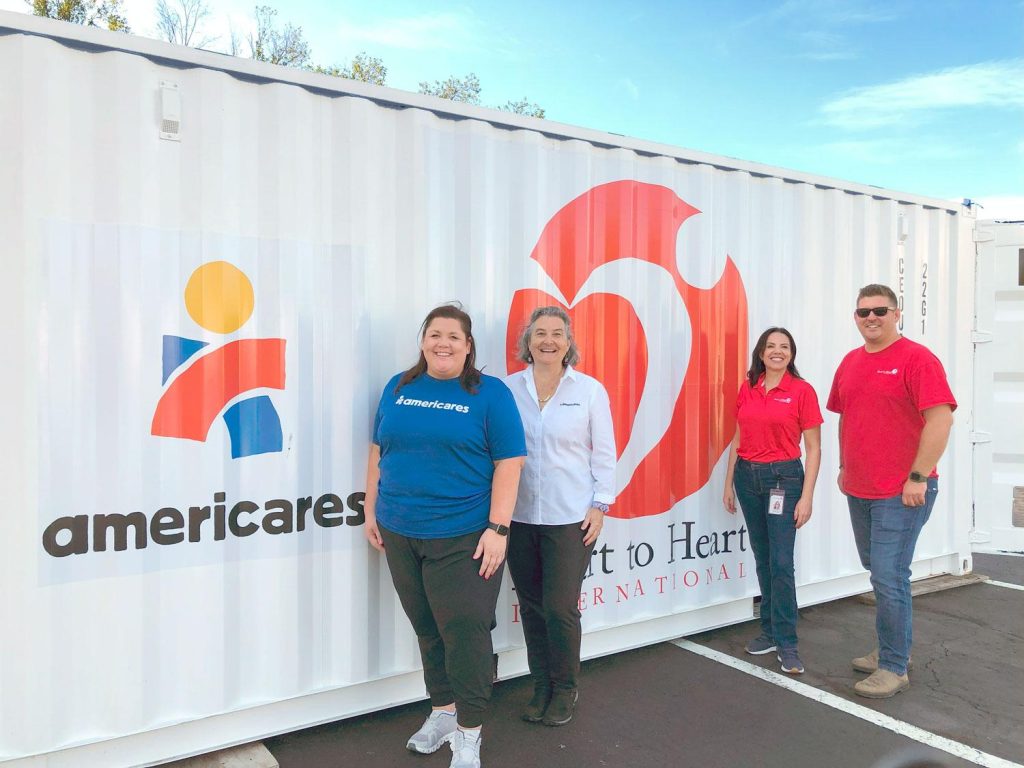



What this organization is doing for people in the US and all over the world is nothing short of amazing. Spending a few hours to volunteer was a great experience and I would definitely encourage everyone to find time to contribute!

I volunteer, along with others, who have a common goal. To help and support the staff as they organize then head out across the globe with hygiene kits, medicines and mobile clinics. When a request comes in for help from HHI, staff is ready and willing to help but it also takes many volunteers and donations to support this goal.
Great organization helping folks in the USA and wherever needed around the world.
I read a lot of news every day because I want to know what is going on around me and in the world. Being aware of the many disasters and injustices can feel like a huge burden to carry. Volunteering at Heart to Heart gives me the sense that I am helping in a small way and I’m not just involved with my own stuff.
As I’m aging, I realized how blessed I’ve been in so many ways. In my younger years, I worked a lot with the homeless community. As I’m aging I wanted to still give back to my community but do it closer to my home. I volunteered at Heart to Heart with a church group and decided I liked their mission. I’m just one person, but uniting with a group like Heart to Heart I can do so much more.
I feel so privileged to be able to help anyone in need. I’ve learned so much from people who are humbled by life’s struggles. As one person told me, “we’re all just one disaster from homelessness.” Every person should volunteer at least once in their life.
I love to provide quality time in service. Service is at the core of my being. My parents taught me when I was a child to never stop serving and loving people.
Volunteering helps me to feel that I am moving forward in a positive way and that my contribution has some purpose especially in these times of great hardship and suffering for so many people.
I love being able to do something for others especially in a real time of need. Serving fills my cup and blesses my heart. It never ceases to amaze me that in the middle of all the tragedy, those we serve always thank us for being there.
Volunteering reminds me that healing doesn’t always come in big moments; it often shows up in simple acts of kindness, shared humanity, and showing up for people when they feel forgotten. That’s why I’m proud to serve.

Medical testing plays a vital role in delivering effective healthcare services. However, remote communities in Ghana face significant challenges due to limited access to laboratory diagnostics. To address this issue, Heart to Heart International has partnered with BD, a global leader in medical technology, and Millennium Promise, a nonprofit organization focused on disease diagnosis and prevention in Ghana. Our partners at Millennium Promise stated, ‘”The completion of the Laboratory Block marks a transformational step in healthcare delivery for the community.”
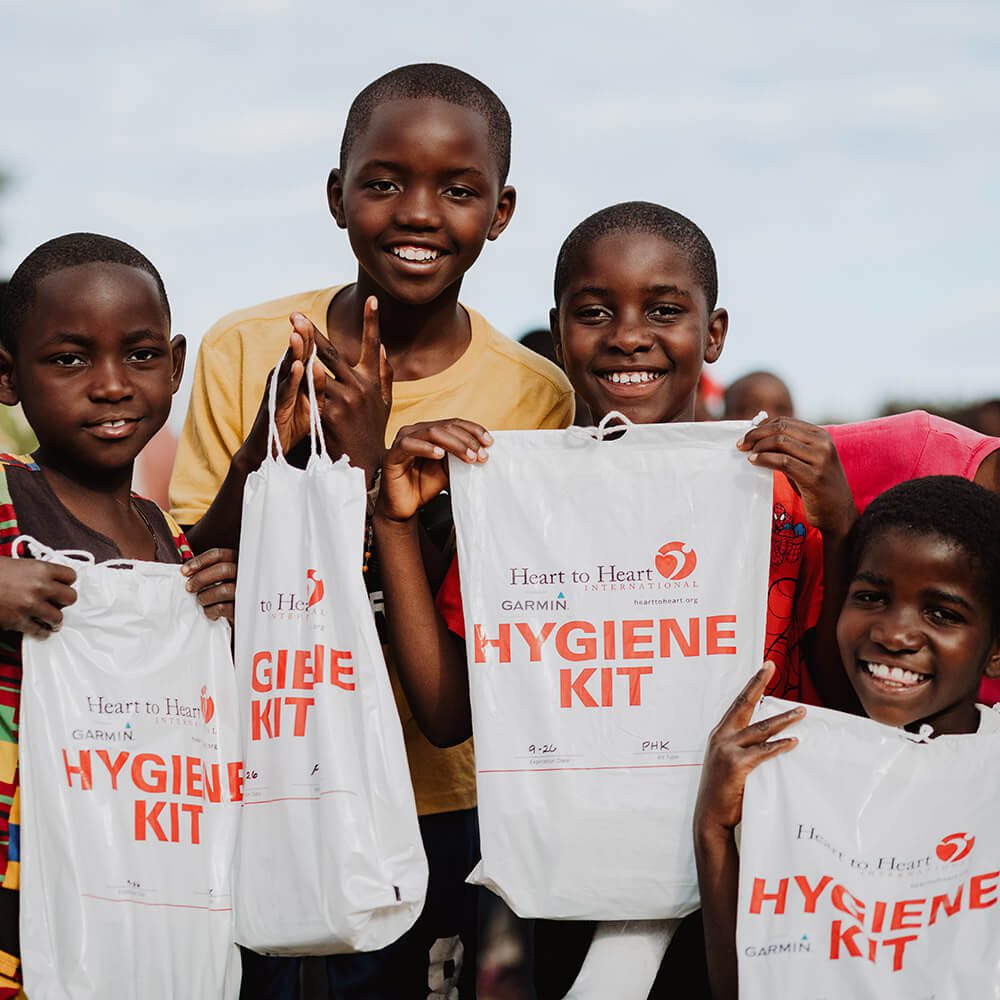
We distributed 8,000 Hygiene kits to 600 youth from the community. The items in the kits are considered a luxury to most of the community, (even basic soap and washcloth) so they were incredibly helpful in the aim to promote health and good hygiene for all of them. They were so happy! The health of these youth will be improved immensely! Every single recipient of the hygiene kits was so very grateful. One said to us “I can now feel good and keep clean, zikomo!”

Your loyalty helps us not to give up and gives us the feeling of a reliable shoulder to lean on.

Your donations of medicines and supplies sustain our clinic, supporting the most vulnerable children. Thank you!

If the only thing that was useful from your shipment was this wheelchair, it would’ve all been worth it because you changed this man’s life.” – Fundación Nueva Alegria in Dominican Republic

May I take this opportunity to thank the donors for saving my life. I was afraid I would die after the snake bite. The medical care was amazing.” – Tebenguni, a 15-year-old girl in Eswatini, who received life-saving care thanks to donated medical supplies.
Wildfires can often be prevented by being careful with fire outdoors.
Most wildfires are started by people, so small actions can make a big difference.
Wildfires can move very quickly—sometimes as fast as 14 miles per hour.
In windy and dry conditions, fire can spread across grasslands in just minutes, making it hard to escape or stop.
On average, there are more than 60,000 wildfires in the U.S. every year.
They happen most often in the summer and fall, especially during hot and dry weather.
Some wildfires are put out in a few days, but others can last weeks or even months.
The size of the fire, weather conditions, and how hard it is to reach all affect how long it burns.