 Tree climbing is an almost universal childhood pastime. Kids the world over scale branches, one at a time, higher and higher, for a chance to glimpse their world from a different perspective.
But with every climb, there is also a chance of a fall. And for one young girl in the remote village of Namatar in Nepal, her fall came in the summer of 2017.
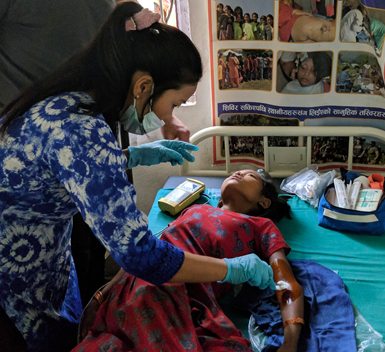 “Roshika” fell from a tree and a branch impaled her arm. Her parents could not afford to seek medical treatment for their daughter, but they did not know that sepsis could cause Roshika to lose her arm to amputation or even her life to a spreading infection.
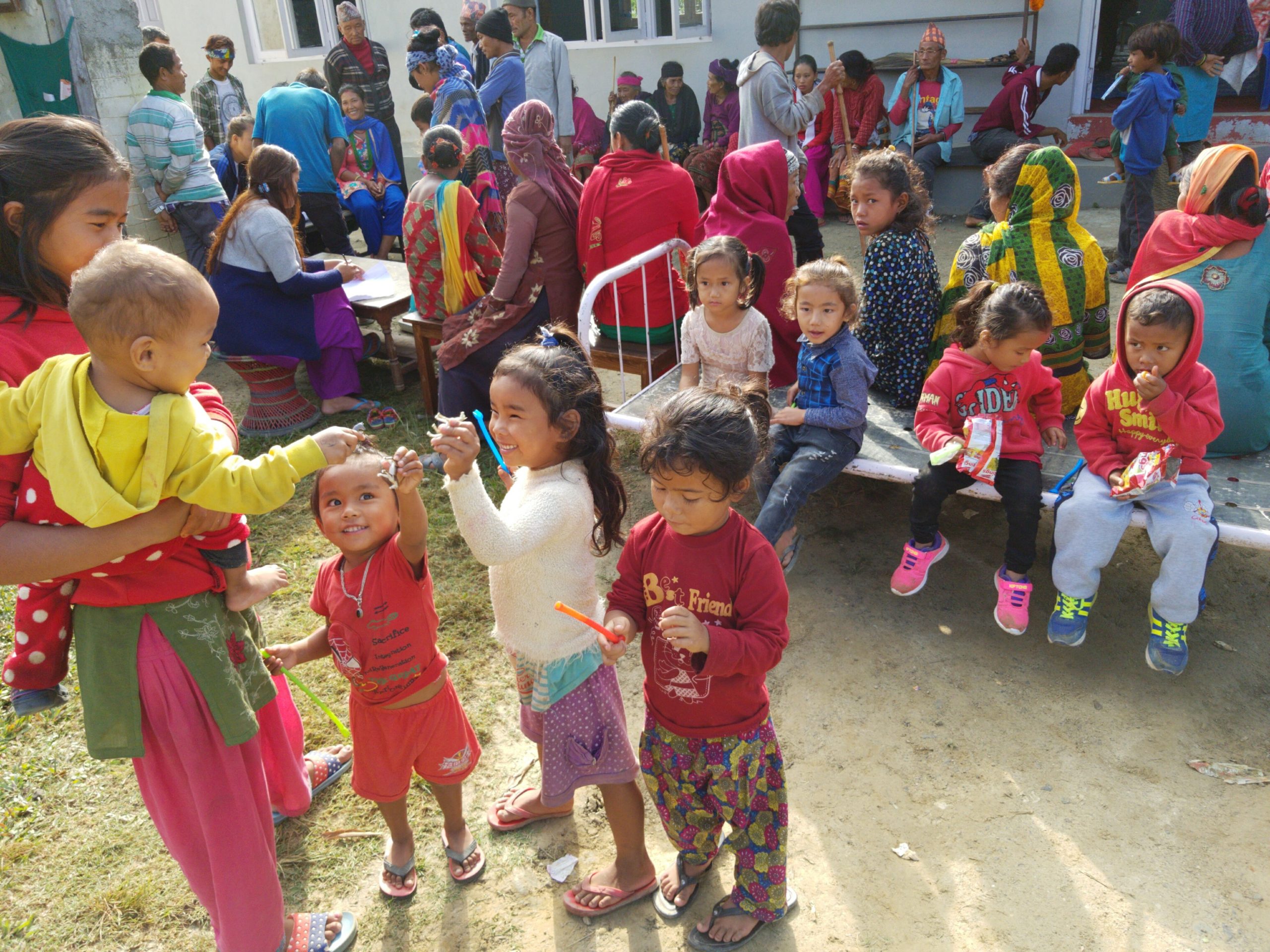
The family reluctantly accepted that Roshkia’s arm would remain a permanent reminder of that fall. That is, until two doctors, one EMT and three nurses showed up to hold a medical clinic in their remote village in the Makwanpur district.
The team of medical providers were in Nepal as a result of Heart to Heart International’s funding and its relationship Sundar Dhoka Saathi Sewa (SDSS). That relationship began after an earthquake struck near the city of Khatmandu in central Nepal in April 2015. HHI sent medical volunteers and supplies to rural and hard-to-reach areas in Nepal, and it was during this response that HHI collaborated with other aid organizations, including SDSS.
SDSS is an organization of Nepalese women and men working to improve health access and patient navigation in their own country. By helping SDSS, HHI fulfills its own mission of working to create sustainable community health care. It was with this in mind that, after monsoon rains triggered flooding and landslides in 2017, HHI looked for ways to support the work SDSS was doing in Nepal.
A plan developed to send a medical team to perform clinics in the extremely poor and remote regions of Nepal. SDSS organized the clinics and locations, and HHI facilitated the funding that brought the medical professionals to Nepal. The team hosted clinics throughout the Makwanpur district, providing care to more than 2,000 patients during the 12 day trip. At one clinic, more than 800 patients were seen in a single day alone. Providers wore headlamps late into the night to treat everyone who had come for help.
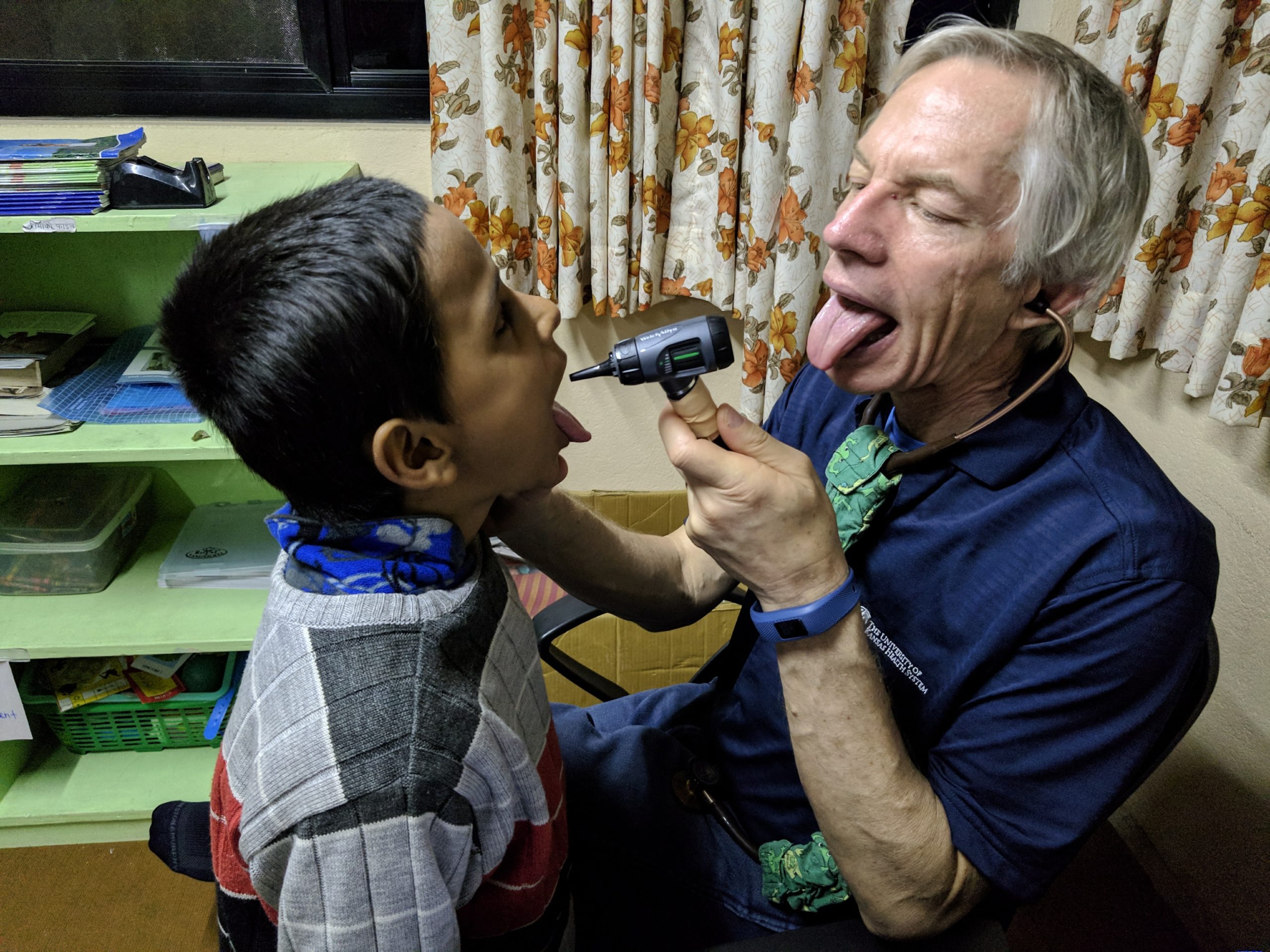 In addition to providing desperately needed medical care to patients, the clinics served as a portal to opening up the region for SDSS’s services. SDSS helps those patients who need further care in the larger city of Khatmandu to navigate the system. Many people living in poor, remote areas have never been away from their villages or the surrounding areas. Having never been to Khatmandu, they don’t have the knowledge about seeking treatment in the city or the logistics of how to do it. SDSS takes those people by the hand and leads them through the process, including providing accommodations, translators and accompanying them on hospital visits.
Rosika’s family didn’t need further care, because the team of medical providers at the clinic could provide the care she needed. These doctors surmised that her arm was in fact beginning to turn septic and if it had gone untreated much longer, she probably would have needed it to be amputated.
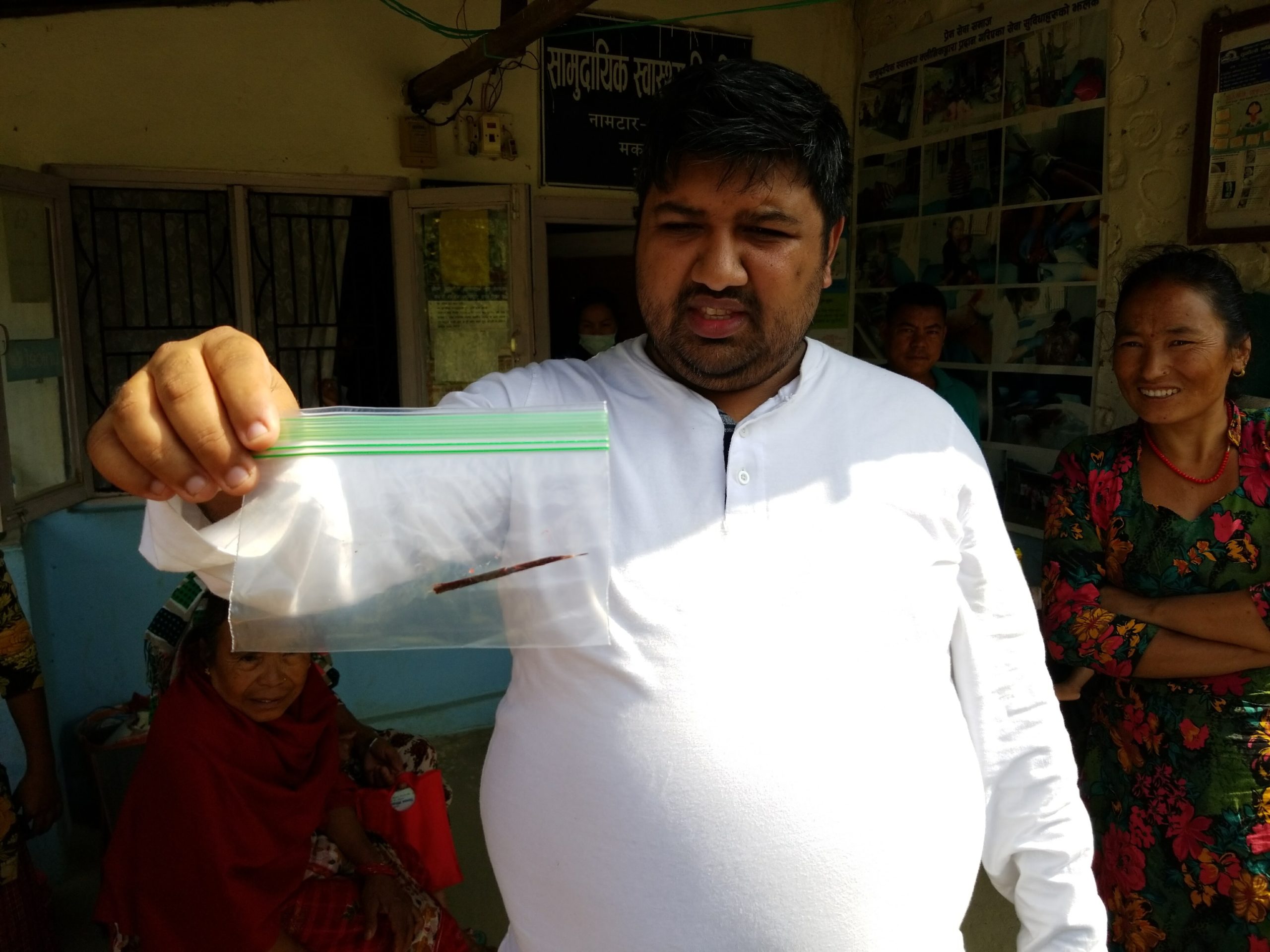 Instead of an amputation, this team surgically removed the 4-inch shard of wood from Roshika’s arm. This saved her limb and most probably her life. One fall at the age of 11 had almost permanently changed Roshika’s life.
Now, thanks to medical providers volunteering their time and HHI helping to get them there, Roshika is free to explore and climb, just like any other child around the world.